Mission Control…


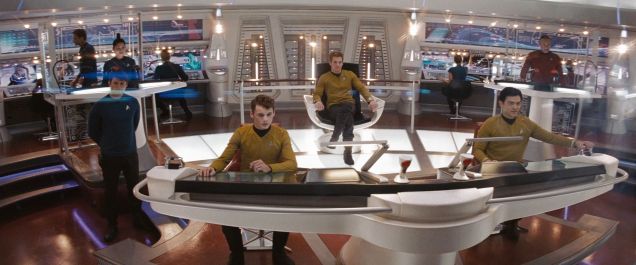
Visualize the images of “mission control” that you might have seen as part of any space shuttle launches or a scene from the movie Apollo 13. Another good image to conjure would be the “bridge” from the starship Enterprise in Star Trek. uss_enterprise_alternate_reality_bridgeIn each of these images you have a similar underlying idea of a location where a massive amount of “sensory” data flows into a command center. Advanced technology and highly skilled resources review every bit of data that is possible to capture, scanning the data stream for any anomalies or patterns. Once something “blips,” attention is immediately focused on that aberration and a reaction is mounted:

“Captain, they’re raising their shields!”

What happens next is immediate: “Red Alert”

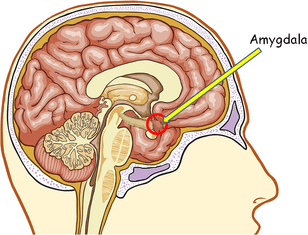
There is a structure in the human brain called the amygdala. It is part of what is known as the limbic system. The amygdala is located in the temporal lobe of the brain – in close proximity to the brain stem.

_4755829
Source: brainmadesimple.com

There are some who refer to the amygdala as the fear center of the brain; it is considered by others to be the emotion-processing center of the brain. I like to consider the amygdala “mission control” or, maybe more accurately, a “strategic command center.”


It is the amygdala that signals “Red Alert” in the brain. The amygdala is the emergency management system in the brain using to separate pathways of response. The amygdala is the initial, immediate, instantaneous response to anomaly.

There is also a data stream to the amygdala’s mission control that links through the sensory cortex of the brain. This secondary data stream provides the problem-solving associated with the “red alert.”

To give some context to how the amygdala processes and responds to the data that streams through it, let’s talk about a walk I took through a nature park near my home. It was a balmy late-summer day. Beautiful clear skies and roughly eighty degrees – it was a perfect day for a walk on the asphalt path of the park.

As I was strolling through the path, enjoying the beauty of the gorgeous day, my attention suddenly snapped to an object that had been laying on the edge of the path as it began to stretch itself out across the width of the path.   My immediate reaction was to stop. It took a millisecond or two longer for my brain to grasp that it wasn’t a stick that was moving, it was a snake! I took an instinctive step backwards away from the snake as I was observing how long it was before I remembered that I live in a part of the world where few poisonous snakes are found outside zoos and pet stores. I then took a step closer to see if I could capture a picture of the reptile with my cellphone because I didn’t recall that garter snakes could grow to three feet in length.

My amygdala was responsible for the immediate snap of my attention to the unexpected movement on the side of the path, the immediate stop and my step backwards: Whoa – stop – safe distance!

The curiosity and inquisitive action that occurred once my initial startle had passed reflected that my amygdala had moved from the immediate “survival” response into processing through the sensory cortex which transformed my initial surprise into an investigative process. “What is that?”

Another good example of this blended pathway of sensory processing would be an adult’s response to a loud noise. An explosion occurs, your amygdala has you “jumping” and turning your head in the direction of the sound before your eyes, ears, and nose are reporting that the car next to you backfired.

The amygdala generates the “Houston, we have a problem” response. The sensory cortex pathway brings forth the investigative team: what was that? What direction did it come from? Have we seen this before? Who is involved? Etc.

All incoming stimulus – visual, auditory, tactile, spatial – is processed through the amygdala. There is a constant stream of data flowing through – even when you are not conscious of it. In all truth, the amygdala is reviewing this stream of data particularly when you are not conscious of it.

Is anyone reading this asking themselves why I would be including this information in a blog about addiction and recovery?  I’d love to hear your thoughts…

Meet Magellan…

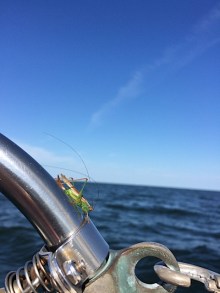
Last Friday, I was sailing with a friend in the middle of the Long Island Sound.  I looked down to find a grasshopper exploring the roof of the cabin on my sailboat.  Sunday I was sailing again – once again in the middle of the Sound easily three miles from shore. As I IMG_0608was sitting by the tiller, I happened to look to my left and came eye to eye with a different grasshopper!

Meet my new friend Magellan.

My response to this close encounter was to laugh (after I got over my initial shock at having this creature so close to my face).  And then I began looking for God as coincidences in my life usually let me know that my Higher Power is present.  I’ve owned this boat for over a decade, having one grasshopper aboard was noteworthy – having two in three days was unprecedented.

So Magellan remained with me for the remainder of the day on Sunday – about three hours of sailing.  He quite happily maintained his position on the rail with his antennae flowing in the westerly breeze.  As I moored the boat in the harbor, I carried on a conversation with him extolling the virtues of the foliage surrounding us and wishing him joy for wherever his travels would take him. And I got off the boat.

I returned to the boat on Monday to enjoy my lunch in the glorious weather.  I climbed aboard and got the cushions all comfy for my meal and some meditation.  When I happened to look up and I found myself once again eye to eye with Magellan.  He had made his way around the cockpit and was now perched on the teak rails of the cabin.

Now I am really intrigued.  Not only was a grasshopper on the boat, it was the same creature as the day before – this is getting interesting.  I greeted him and let him know that I was concerned for his health as I was now wondering if he might have flown into the sails the day before and injured himself.

I settled on one of the cockpit benches to meditate.  I opened up an app I use, started the guided meditation and closed my eyes concentrating on the meditation and the movement of the boat.

A horn sounded.  My eyes snapped open and I had the pleasure of watching Magellan walking his way across the roof of the cabin toward my phone that was playing meditation music.  I turned the sound off, the grasshopper stopped moving.  Ok, now we’re in really strange territory!

While all this was unfolding, the thought that kept circling around in my head was, “Is it odd or is it God?” But I couldn’t immediately see the message.  I sent a friend a text with Magellan’s picture and she helpfully provided a link about the grasshopper totem and what it might mean.  I read the information:  patience, prosperity, perseverance.  Okay, I get it but why now?  Why today?

As I was reflecting on this creature  and why he had been dropped into my life it dawned on me that he might be legitimately injured, hence his prolonged visit on my boat.  That left me with the dilemma of what to do next.  I certainly wasn’t going to jump into codependency, grab a cup and bring him home.  But at the same time I was uncomfortable just leaving him.

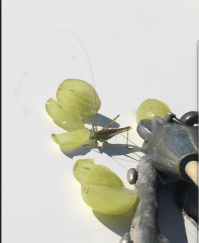
Being me, I jumped on the internet to determine what grasshoppers actually eat (okay – I’m not taking him home but I’m also not leaving him to starve if he is injured!)  I was quite pleased to learn that any plant-based carbohydrate might appeal.  I just happened to have a bunch of grapes in my bag.  Feeling absolutely ridiculous that I was worried about the health and welfare of this grasshopper, I bit a few grapes in half and strategically located them within antenna distance of Magellan.

Screen Shot 2016-09-01 at 5.31.21 PMTo my surprise and glee, Magellan walked over and began to eat.  I sat there watching as his antennae blew rhythmically in the wind.  He investigated each broken grape, nibbled a bite or two and moved to the next.  And that is when the lesson hit me directly between the eyes.  Here was yet another metaphor for recovery.

When I started the process of recovery, I was adrift in an ocean of my drugs of choice.  Literally – quite literally – drowning in my addiction and the bad choices that arose from it.

And much like my friend Magellan, by God’s grace alone, I found myself on the boat called love, sailing in the direction of the safe harbor of unconditional love and acceptance – a place I had never been before.  On that first leg of my journey, I relied on the skills and wisdom of others for navigation.  I had no clue where I was going or much less how to get there, but I was carried by my home groups until I could carry myself.

But even in a safe harbor, life isn’t simple or straightforward – challenging things happen – people die, we lose our jobs, we are unexpectedly injured, our bodies age.  Even when we are on the boat called love, difficulties arise that challenge us, our ability to cope and our recoveries.  In sailing terms, life can be smooth sailing until a ferry leaves a wake immediately adjacent to the boat – everything rocks, stuff falls everywhere and you have to hold on so you don’t fall too.

During those hard times, when we can’t figure out what to do, when we’re injured and can’t do for ourselves, when those waves of change have rocked every part of our lives and seem particularly hard to navigate and downright unfair, it is easy to question our faith and to wonder if God truly loves us.  Those dry periods where everything is rocking, we can’t see the path through and it feels like God has abandoned us can be some of the most difficult times of recovery.

And then, one day, boom, out of nowhere, in an environment where it is wholly unexpected, grapes appear.  My needs are taken care of in ways that I simply couldn’t imagine (I mean really, do you think any self-respecting grasshopper would be expecting grapes to drop out of the sky in the middle of a harbor?).  Literally, manna from heaven arrives in my life.

So this little grasshopper became the guru for me earlier this week.  His presence in my day led me to being reminded of a powerful lesson about patience with God.  He served as a potent reminder from my Higher Power.

I had been journaling that morning about the discomfort of living in the “space between the miracles.”  The space between the miracles are those points in recovery where change isn’t happening (or happening fast enough for me !), when I don’t have the clarity I feel I need, or when the struggle for growth is overwhelming and feels like it will last forever.  In my mind, the God of my Understanding sent Magellan to remind me that grapes are on their way in my life, that I can’t predict amazing and that gratitude for where I am and a willingness to just show up in faith will lead me to them.

The Survival Machine

So, why did I reference the concept of the various ages of the human brain and potentially how the brain developed in my last post?   The discussion of why the brain works, and to some degree how certain parts of the brain work, is important to truly understanding addiction and recovery as processes of learned behavior.[1]

I think, that as a society, as a culture, as an evolved species with an impressive capacity to think and consider abstract concepts, we lose sight of the fact that the human brain was not originally designed to “think”, at least not in the context of how we might consider the action of “thinking” today. The oldest parts of our brains originally evolved to act instinctively in order to keep the organism alive. Our brain is, in the words of James Zull, “a survival machine.”

Today we live in our highly evolved glory surrounded by a robust social safety net that includes abundant resources for nutrition. Our lives in the United States include a great deal of technology to keep us safe from the threats that our ancestors faced on a daily basis: vaccines to keep us healthy, animal control to keep predators at bay, heated homes to protect us from the elements. We lose sight of the fact that everything about our brain evolved on the basis of managing threat or danger and experiencing things that sustained the species (and generated pleasure).

It is easy to understand the necessity of the “fear center” in your brain when you consider the conditions that most humans have lived in. If you look back beyond the aberration of the last 120 years, the ability to recognize a threat and instantaneously respond to it with movement and problem-solving served us well when, as a species, we were dancing with lions and tigers and bears all day. During our days filled with higher order thinking (hmmm… what will I order as take-out tonight?) it is very easy to lose conscious awareness of how important and powerful the fear and threat management mechanisms in our brains really are.

Our first breaths were taken not because we thought and made the choice to breathe. Our first breaths were taken because certain structures deep in our brains responded to external stimulus and impelled us to do so.

Let’s take the survival mechanisms of the human brain out for a test drive. Let’s demonstrate how the survival pathways in our brain trump the power of conscious thought.

Take a deep breath and hold it.Unknown-2

Repeat the following thought in your mind:

“I am not going to breathe, I am not going to breathe.”

Wait thirty seconds. Wait 45 seconds. What happens?

Your chest begins to feel a little tight; your body begins to tense. If you hold your breath long enough your face will flush, you will begin to sweat and all of sudden, against your will, you will exhale.

Why?

Because those “unconscious” survival pathways of your brain are doing their job – they are keeping you alive – regardless of what you are thinking.

If you continue to resist, what happens? Your body shuts down unnecessary processing – like conscious thought – you lose consciousness and your body returns to “normal” breathing. Such is the power of the threat management strategies of the human brain and body.

Each day hundreds of thousands of “invisible” biochemical processes occur in your brain – all designed to keep you alive and the species evolving. Breathing; eating; moving; turning your head toward an unexpected sound; ducking your head when something falls off a shelf – all seemingly “unconscious” processes that occur over and over with little, if any, “thought” on your part. All processes designed to keep the organism that is you alive and functioning for one more day without you consciously thinking about it.

How do you think this might be related to the disease of addiction?  I’d love to hear your comments.

**********

Zull, J. (2002). The Art of Changing the Brain. Sterling, VA: Stylus Publishing

**********

[1] N.B. Throughout my posts, I reference certain processes or functions of areas of the human brain. My goal here is to explain what is relevant about brain functionality and evolution, not to spend a great deal of time on the how of brain function. There are a number of useful resources that explain how the brain works (for instance, McGill University has a wonderful resource online about brain structures and how they interact).

Very Old Technology

So, let’s start with a question: Exactly how old are you? Early 30’s? Early 70’s? Somewhere in between?

My answer to this question is a little different. In my understanding, “you” are at minimum tens of thousands if not somewhere in the realm of hundreds of millions of years old. That is when the nature and structure of the core processors of your brain were developed. That is when the “technology” – the basic operating system that supports “you” – was initially coded.

While I would love to tell you that you are unique and different and the latest release of this incredible wetware, the unfortunate reality is that your brain – and the brain of everyone standing around you – runs on release 1.0 of the Reptile operating system developed before there was code.

I happen to be a dinosaur. I had the privilege of using computers when the idea of a personal computer (PC) was first commercialized in the late 1980s and early 1990s. At the time, MS-DOS (an acronym for Microsoft Disk Operating System) was the prevailing operating system for most PCs. This operating system was the basis for main-stream personal computing for over a decade (the Microsoft Windows systems was a hybrid of this system until the Millennial Edition).

A disk operating system is basically group of rules and processes that govern how information is accessed and stored on a computer. The traffic laws that govern commuter traffic could be considered an analogy for it. There are rules for how cars can get on and off the highway, where they can park, how fast they can move and how many can be moving at once. The disk operating system governed how data could move and was stored on early computers.

So, way back in the day, software architects would develop computer programs using this underlying, basic computer operating system, a basic set of rules for the management of data. Because the basic operating system was initially effective in meeting certain fundamental computing needs, as new programs were developed the existing effective processes were added to and expanded on instead of being replaced. Developers would create programs with advanced features and functionality using the basic DOS operating system as the underlying computer platform. Release after release (meaning Windows 3.1, Windows 95, Windows 98, etc.) offered incrementally increasing functionality and flexibility while all using some version of MS-DOS as the underlying computing strategy.

Much like the evolution of computing technology, so occurred the evolution of human grey matter over many millennia. It is suggested by some scientists that the “human brain” has doubled in size over the course of the last 7 million years. Much of this growth has occurred over the last 2 million years. This growth included the addition of new structures that function on an ancient base.

The brain stem is the oldest part of the human brain – it is what is sometimes referred to as the “reptilian” part of the human brain. It controls the basic operating of the human body – breathing, circulation, balance, vision and hearing. The brain stem represents the basic operating system of the human brain. As humans developed higher order reasoning capacity, the additional structures of the brain did not recreate the basic operating system, but instead developed more sophisticated features using the functioning of the brain stem as a platform.

Like the evolutionary process supporting the development of PCs, where the original operating rules remain consistent release after release with more sophisticated applications being developed on top of them, so too did human grey matter evolve around the basic functionality of the brain stem. In effect, the higher-level cognitive function that occurs in the frontal cortex of the human brain is operating on the computing equivalent of pre-historic DOS 1.0. Additional functioning capacity did not rewrite the underlying human operating system, but instead learned how to leverage it into higher-order thinking.

The limbic system – the brain structures that govern emotions and judgment -evolved next. The human brain stem and the limbic system – the fear and pleasure centers that are immediately adjacent to it in your brain – play a crucial role in human decision-making. And like much of the “early” technology created to power our computers, the underlying operating system that supports what we believe to be our higher order thinking, is not particularly accurate, has limited processing capability and, if you’ll forgive the computing pun, is rather basic in spite of its elegant complexity.

A lesson from an osprey…

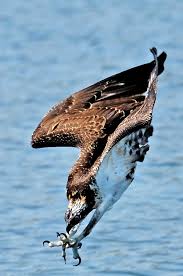
Last week while I was sailing, I had the privilege of watching a family of ospreys.  There images-4were five birds all together – each making lazy circles in the sky above my sailboat.  It was pretty clear to me that “Mom” and “Dad” had the kids out for a fishing lesson.  “Mom” – an osprey with a massive wingspan – slowly circled the group, “whistling” to the other birds.

Mom’s aspect changed.  She seemed as if she were hovering in the air, almost stalled.  Suddenly, she began a rapid dive toward the harbor.  Wings back, intent on her target.  images-5

There was no fear about the plunge into the water at full speed.  There was no deviation from her path.  At the last minute, her talons moved forward and into the water she went, feet first.

Second later, she rose from the water – a fish firmly grasped in her talons – slowly, rhythmically ascending with her prize.

So, why am I writing this here?  For me this is an epic metaphor for how the 12 steps work.  We see people circling around the rooms – literally, circling.  In and out, in and out, watching as other people’s lives improve.

They get to the point where they make the decision to turn their wills and lives over.  And then they watch a seasoned member make the dive into Steps 4 – 9.

“You want me to do what?  Hell no!”

What looks like a perilous plunge into the veritable unknown and unfamiliar, they continue to circle refusing to make the dive until the pain of living becomes so great that they eventually surrender to do whatever its takes – including the decision to dive into the unknown and unfamiliar – trusting that abundance and a better life is on the other side.

No osprey is going to get dinner without that dive into what looks like a hostile and unfamiliar environment.  The same can be said for recovery.  No addict is going to get better without that same dive into the unknown, literally supported by the wings of faith.  Those peope with a little time and a robust recovery understand that a fearless dive into the truth is the only path by which abundance and joy becomes a routine part of life.

I loved the metaphor – I hope it helps you!

There is an epic video of ospreys hunting here:  http://goodnature.nathab.com/watch-as-ospreys-demonstrate-their-hunting-skills/   The segment of the second bird going into the water makes me smile.  The best part for me is when it is rising and “shakes off” the water from its swim.  That for me is the best part of working the 12 Steps – shaking off the vestiges of the process while living into a new and fulfilling life.


Bruce Almighty – Is It Odd or Is It God?

Several years ago, while working for a small, not-for-profit medical education company, I created a novel approach to training physicians about their diagnostic decision processes.  This idea had tremendous promise.  We heavily promoted this concept.  After months of work and speaking with a number of people at a major medical society in neurology about this product, I was invited to attend a Patient Safety Subcommittee meeting to discuss the impact of diagnostic error in neurology and this specific product.  This was November of 2009.

I had tremendous anxiety about this trip.  I am not a person who possesses a great deal of self-esteem.  I question my own ideas and intellect constantly.  I’ve spent most of my life living in the land of less then in a state of not-good-enough.  And while I have improved in my ability to “act as if” over the course of the last 20 years of my life, as I move forward in the process to more imposing or difficult challenges, anxiety, fear of rejection and abandonment and fear of failure remain my constant companions.  This trip was no different.

I agreed to participate in this meeting about two weeks before the actual meeting.  The medical society made all the arrangements for me.  My flight and hotel were addressed through their travel team – I simply needed to show up.  The Patient Safety Subcommittee meeting was being held in Las Vegas (as it is every year). I found myself on a flight to MacCarren airport asking myself what the hell I was doing there.

The entire trip from New York to Vegas was colored by an internal discussion with the Universe about my fear.   I was battling the internal voices that were telling me that I was going to fail.  I had a constant tape running in my head telling me that this idea was bogus and it won’t work.

It was a lovely flight.

To offset the committee in my head, I repeated “Thy will, not mine, be done” over and over. I stayed in the discussion of asking only to know what the Universe needed from me in that moment and to be given the power to carry whatever it might be out.  I kept telling myself to detach from the outcome of success or failure of the venture and to look at the value of the trip for what it was – a learning experience.  I stayed sane by asking the Universe to show me what Her will was for me.  I repeatedly asked for the courage to face whatever it might be.  And, I asked the Universe to show me that I was in the right place.

The hotel that had been arranged was Planet Hollywood.  When I arrived, I was mentally and physically exhausted.  I was greeted with a big smile from an employee who was tremendously enthusiastic about my visit while I checked it at the cavernous front desk. .  We went through the typical dialogue that occurs at hotel registration while you’re waiting for the computer to process and documents to print – questions like “where are you travelling from,” “what will you be doing while you are in town,” “have you been here before,” etc.  I truly wanted to say that I was from New York and that I expected my career in continuing medical education to crash and burn while I was here.  Instead, I answered his questions honestly, wanting only to get to my room and lie down.

Smiling broadly, this gentleman handed me my identification, credit card and room key, and concluded our conversation by saying that a very special room had been reserved for me.  I remember thinking at the time, “I bet you say that to all the guests!” – not that I was in a place governed by cynicism!

This enthusiastic young man then informed me that this room was on a private floor of the hotel.  I was given specific instructions as to what elevator to use and how to access that floor.

I followed his instructions and arrived at (what I think was) the 31st floor of the hotel.  I walked down the hallway – which for all intents and purposes looked like every other hotel hallway I had ever walked down.  I opened the door to the room, stepped inside and started laughing.

When I stepped into the room, I once again got a taste of the Universe’s sense of humor.

I happen to love the Jim Carrey movie, “Bruce Almighty.”  I fell in love with the movie because of its underlying spiritual messaging:  God writes straight with crooked lines, self-centered fear is a problem for us all, is it a blessing or a tragedy and how do you know, etc.  I have watched this movie more times than I can count with my children.  I quite frequently recommend it to people I am working with who are struggling with the idea of accepting the “process” of spiritual development.

Early in the movie, Jim Carey’s character, Bruce, has experienced what he believes to be the worst day of this life.  It’s the end of the day and he is in his car with prayer beads that his girlfriend has given him.

As he is driving, he is having a “conversation” with God:

“Okay God, you want me to talk to You.  Talk back – tell me what’s going on.  What should I do?  Give me a signal!”

The video cuts to the image of a road construction sign that he must be seeing through his windshield.  It’s one of the big, generator-powered message signs that can be programmed to deliver specific directions.  This sign says, “Caution Ahead,” in big, illuminated, flashing letters.

The movie cuts back to an exasperated Bruce saying:

“I need Your guidance, Lord, please send me a sign!”

At which the camera focuses on the construction truck that has just turned in front of Bruce’s car.  This truck is carrying all manner of brilliantly illuminated road signs.  “Stop,” “Do Not Enter,” “Wrong Way,” “Dead End” are all clearly visible in the dark night.

Bruce expresses his anger at the slow moving truck in front of him.  He swerves to the right and accelerates to pass the truck.  He reaches over and grabs the prayer beads off the rear-view mirror, telling God that he needs a miracle – inviting God to reach into his life – and a second later he crashes his car.  That car crash becomes a turning point in the movie and is the beginning of transforming his journey of faith.

I love this clip in the movie because it so clearly illustrates the concept of how my experience with the Universe works, how my Higher Power speaks through situations and circumstances.  This clip is a very powerful reminder to me of how my selfishness and my often self-centered demands for how God should solve my problems quite frequently gets in the way of me seeing the signs that have been sent.  My frustration with not getting the message that I want in the way I expect to receive it can blind me to seeing the messages that are directly in front of me.

So, why did I tell you this and why was I laughing when I walked into my hotel room in Vegas?

My hotel room was the Jim Carrey room at Planet Hollywood; the first thing I saw hanging in a glass case on the wall directly across from the door was the shirt he wore in Bruce Almighty.  And all I could think was “send me a sign.”

I kept a photo of that glassed-encased shirt in my cellphone for many years.

There were 2,600 rooms in the Planet Hollywood facility in Las Vegas when I visited in 2009.  I stood there wondering about the odds of anyone being randomly assigned a specific room at a specific time in Las Vegas – considering the turnover of those rooms on any given day.   I tried to work the algorithm – it wasn’t simply 1 out of 2600 because not every guest checked out that morning.  I thought about the flow of the rooms, how they are cleaned and turned over.  And I wondered if I should go down to the casino and play.

In my mind, a sign had very clearly been delivered.  And my anxiety abated.

I didn’t get the answer about the success of the trip.  I didn’t get a miracle solution to ensure that I could answer every question that I expected would be raised by this room full of very intelligent people.  What I got was a reminder that I am not alone – an opportunity to live the “yea, though I walk through the valley of the shadow I will fear not evil, for Thou are with me” that I taught children in Sunday school.  I was reminded that the Universe’s imagination and creativity is much bigger than mine.

There is tremendous peace that arises for me out of these Odd or God moments.  These little reminders serve to keep “me of little faith” walking down new and unfamiliar roads.  They serve as the signposts to remind me that the God of my Understanding is present. Even if I don’t have the destination in clear sight, I am on the right path which is really all that matters.  I am reminded in these moments to find peace in the process remembering that I cannot predict amazing.
How do you know?

This is another video on the topic of judgment that I crafted for the class I mentioned.  This really speaks to Step 2 and the idea that the creative force of the Universe can be seen when we release judgment of what “should” be and begin to look around at “what is.”

I look forward to your comments!

Know you are loved!!

Rising from the river…

sailboatMy kids and I are sailors. Our sailboat is a modest sloop – less than thirty feet long and almost 30 years old. Were you to jump off the side of our sailboat, you would fall at least three feet until you hit the water. The distance between the waterline and the deck of my boat – the freeboard – is almost three feet. If I lie on my stomach and dangle my arm over the side, I cannot touch the water.

Why am I telling you about the depth of the freeboard on my boat? If you were in the water by the side of my boat there is no way I could lift you directly out of the water. The deck of my boat is easily three feet above the waterline. Were I to try to lean down and grab you, I would be pulled into the water myself.

So, after reading this, you might be asking yourself whether you’d want to sail with me. What would I do if you went over the side? Leave you in the water? The answer is, “of course not.”   While I may not be able to lift you out directly if you went into the water, there are many things I could do to help you lift yourself out.

There are tools that I could offer you to help you climb out of the water. I could throw you a lifeline to keep you near the boat. The kayak could be lowered over the side and you could pull yourself onto it. There’s a ladder that could be lowered over the side that you could swim to and climb.

And there are suggestions I can offer – based on my own experience – for how to use these tools to rise. I could stand on the deck and offer suggestions for how to follow the lifeline to the bow of the boat to find purchase and pull yourself up out of the water and onto the deck using the anchor chain, mooring ball or the bowlines. I could lead you to the engine mount and explain how to use it and the rails to lift yourself up. Specific instructions could be offered for how to climb onto the kayak and use it’s tether to drag it to the side to climb into the sailboat’s cockpit. Encouragement and suggestions could be given while you use the ladder to climb up the sloped and slippery side of the boat.   There are many suggestions I could make to help you pull yourself from the water and back to the deck – all based on my own experience.

Why am I telling you this?

In the 1500s, a Spanish monk named St. John of the Cross wrote a profound thought:

“There is a river which all souls must cross to reach the kingdom of Heaven.  The name of that river is suffering.  But there is a boat which ferries souls across that river.  The name of that boat is love.”

In my experience, for people immersed in the river of suffering, climbing onto the boat called love is very similar to climbing out of the water surrounding my sailboat.

First and foremost: No one can lift you out – you have to lift yourself.

As much as you may want other people to lift you, as much as you may feel that someone else “should” help you, as much as you may be telling yourself that you’re not capable or not really getting the help you need because you are being told to lift yourself – at the end of the day, your journey toward sobriety and sunlight will be determined by your willingness to do the work necessary to lift yourself from the river of suffering. Remember the language: “are these extravagant promises? We think not. They are being fulfilled among us sometimes quickly, sometimes slowly, but they will ALWAYS materialize if we work for them.

ALWAYS is a strong term.

Which leads to the next similarity between pulling yourself onto the deck of my sailboat and pulling yourself out of the river of addiction and suffering: take direction from the people who are on the boat as they might just be able to explain to you how they successfully achieved the deck!

As my book has illustrated, there is a great deal of natural resistance to doing things a different way – particularly when you are in challenging waters. In order to be willing to embrace new ideas, you must first drop the rock of your old ideas. You must become willing to grab firmly to the the lifeline offered with both hands.  You cannot pull yourself up using the anchor chain and bowlines with only one hand free. You will not move into a sober future whilst desperately clinging to the past.

And yes, I know that some of the suggestions that are being offered are unappealing and may even seem threatening.

What do you mean you want me to let go of the behaviors that have kept my head above water for years?

What do you mean you want me to remove layer after layer of wet clothes that I’ve kept around me for decades to protect me from the real or perceived predators around me in the river?

Seriously? How can looking at and cleaning off the slimy, slippery, creepy-looking biology experiment that is growing on the anchor chains that I have avoided my entire life going to help me climb out of the water?

Remember – you are still in the river – you only have theories about what it means to live a sober life. And you have the evidence that the theories you subscribe to don’t work because you are still in the river of suffering. The people on the deck, they have demonstrated experience – whatever they did clearly worked because they are standing on the deck. Look to the outcomes – they have what you want – do what they did and you will get what they got.

And here’s a question for you: why would the folks on the boat called love spend hours, days, months, years, standing by the rails to offer suggestions and support to complete strangers who are trying to turn their lives around?

The answer is really simple: everyone standing on the boat called love at one point started in exactly the same place that you are. Every single one of us – no matter how much time we have – we all started at day one – in the river trying to keep our head above water while the wreckage created by our disease of addiction tried to suck us under.

We understand that behind the resistance and the struggle is a miracle waiting to be revealed. We understand that you are where you are because no one helped you to develop the skills to live any other way. The folks standing at the rail offer to help because they know the beauty of the spirit behind the story, we see so much more than the wreckage – we see the miraculous truth about you because we have learned the miraculous truth about ourselves.

So for those of you that are still struggling – turn toward the voices on the boat – toward the people who love unconditionally and will foster your journey because they recognize the miracle that you are.  They understand that there is nothing you have done that cannot be redeemed and that there is no place you have gone that you cannot return from. Follow those voices.  Follow the voices of the people who know the river of suffering but made the commitment to themselves to climb onto the boat called love.